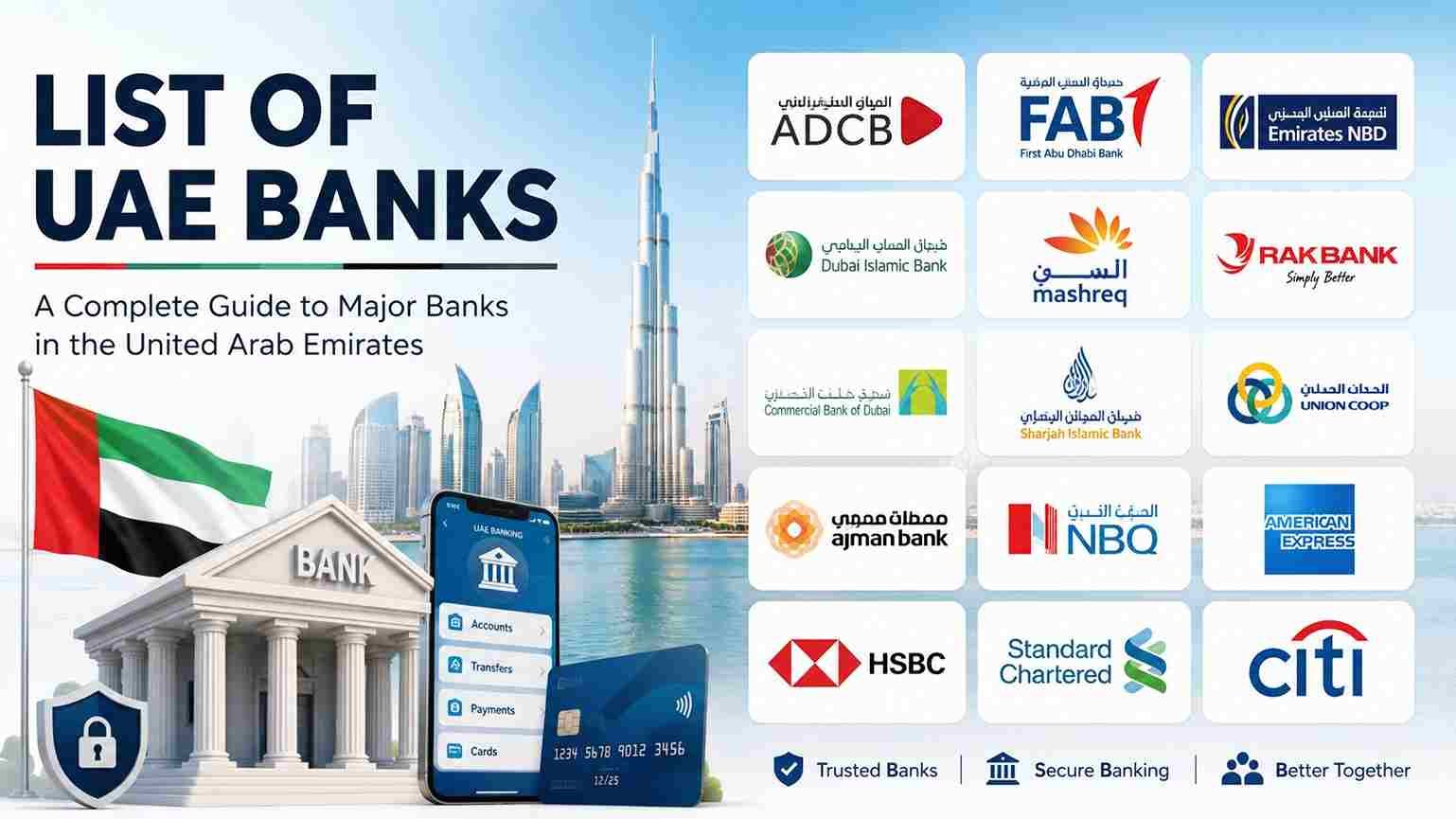
List of UAE Banks – Complete Guide to Banks in the UAE
If you have ever tried to choose a bank in the UAE, you already know that the options can feel a little overwhelming. There are large banks you see everywhere, Islamic banks, newer digital banks, smaller local institutions, and international banks operating branches in the country. Then there are banks that may be excellent for one purpose but not necessarily the right fit for another. Someone looking for a salary account may care about branch access and remittances, while a business owner may be more interested in online banking, international transfers and business financing.
That is why having a clear list of UAE banks is useful before opening an account or comparing banking services. In this guide, we have organised the major locally incorporated banks operating in the UAE, explained the difference between local, GCC and foreign banks, and highlighted what to consider before choosing one.
Safety Note: Before opening a bank account, applying for financing, or sharing Emirates ID, passport or banking information, verify that the institution is licensed and that you are using its official website or branch. The Central Bank of the UAE maintains information on licensed banks and financial institutions. Check the CBUAE official banking and financial institutions information
How Many Banks Are There in the UAE in 2026?
The UAE banking sector includes locally incorporated banks as well as GCC and other foreign banks.
According to the Central Bank of the UAE’s Q2 2026 banking-sector report, there were 24 locally incorporated banks at the end of June 2026. In addition, there were 6 GCC banks plus 1 wholesale GCC bank, and 20 other foreign banks operating in the UAE.
This means that when someone searches for a “list of UAE banks,” they may actually be looking for several different groups of banks.
For practical purposes, this guide starts with the 24 locally incorporated banks, followed by an overview of GCC and international banks.
Complete List of UAE Local Banks
The following locally incorporated banks form the core of the UAE domestic banking sector.
1. Abu Dhabi Commercial Bank
Abu Dhabi Commercial Bank (ADCB) is one of the UAE’s major conventional banks. It provides personal, business and corporate banking services and has a significant presence across the country.
ADCB is headquartered in Abu Dhabi and is one of the banks commonly considered by residents and businesses looking for mainstream UAE banking services.
2. Abu Dhabi Islamic Bank
Abu Dhabi Islamic Bank (ADIB) is one of the UAE’s major Islamic banks.
It offers Sharia-compliant banking products for individuals and businesses, including accounts, cards, financing and other financial services.
ADIB is headquartered in Abu Dhabi and has developed a substantial retail and business banking presence.
3. Ajman Bank
Ajman Bank is an Islamic bank headquartered in Ajman.
It provides Sharia-compliant personal and business banking services and is one of the locally incorporated Islamic banks in the UAE.
4. Al Hilal Bank
Al Hilal Bank is an Abu Dhabi-based Islamic bank and part of the ADCB Group.
The bank focuses on Sharia-compliant banking and digital financial services, with products designed for individuals and businesses.
5. Al Maryah Community Bank
Al Maryah Community Bank is a newer UAE bank with a strong digital focus.
It was established as a specialised national bank and provides digital banking services to customers in the UAE.
The bank appears in the CBUAE register as a national specialised bank headquartered in Abu Dhabi.
6. Bank of Sharjah
Bank of Sharjah is a locally incorporated bank headquartered in Sharjah.
It provides banking services across areas such as corporate and commercial banking and other financial services.
7. Commercial Bank International
Commercial Bank International (CBI) is a UAE-based bank headquartered in the UAE.
It provides retail, corporate and other banking services and is among the locally incorporated banks regulated by the Central Bank.
8. Commercial Bank of Dubai
Commercial Bank of Dubai (CBD) is one of Dubai’s established local banks.
It provides personal banking, business banking, corporate banking, cards, loans and other financial services.
9. Dubai Islamic Bank
Dubai Islamic Bank (DIB) is one of the UAE’s best-known Islamic banks and is headquartered in Dubai.
It offers Sharia-compliant personal, business and corporate banking products.
DIB is also notable for its long history in Islamic banking in the UAE.
10. Emirates Islamic
Emirates Islamic is an Islamic bank headquartered in Dubai and part of the Emirates NBD Group.
It provides Sharia-compliant personal, business and corporate banking products.
11. Emirates Investment Bank
Emirates Investment Bank is a specialised investment bank headquartered in Dubai.
Unlike the large retail banks, its focus is more closely associated with wealth management, investment banking and related services.
12. Emirates NBD
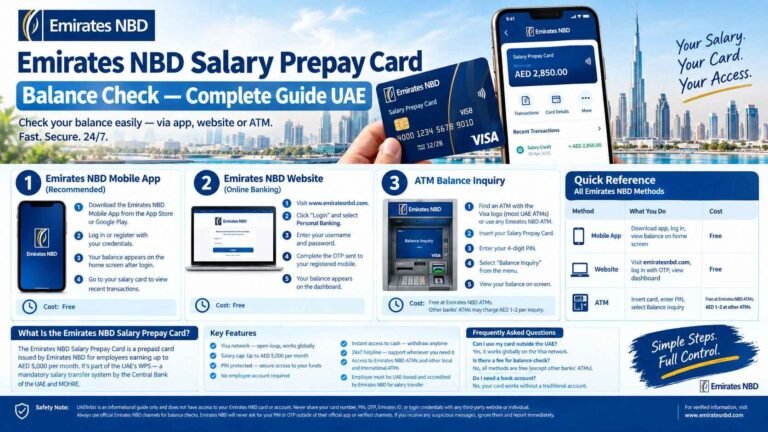
Emirates NBD is one of the UAE’s largest banking groups and is headquartered in Dubai.
Its services cover retail banking, business banking, corporate banking, wealth management, cards, loans and digital banking.
For many UAE residents, Emirates NBD is one of the first names they encounter when comparing mainstream UAE banks.
13. First Abu Dhabi Bank
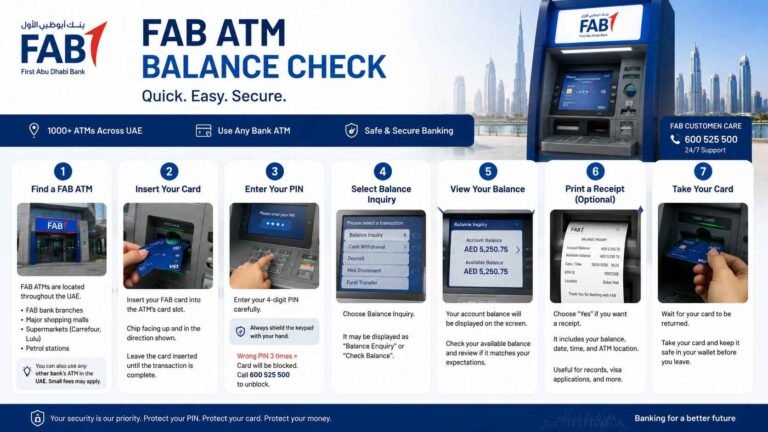
First Abu Dhabi Bank (FAB) is one of the largest banks in the UAE and is headquartered in Abu Dhabi.
FAB provides personal, business, corporate, investment and wealth-management services and has a significant international presence.
14. Invest Bank
Invest Bank is a locally incorporated bank headquartered in Sharjah.
It provides banking and financial services and forms part of the UAE’s group of locally incorporated banks.
15. Mashreq
Mashreq is one of the UAE’s oldest banking institutions and is headquartered in Dubai.
It provides personal, business, corporate and digital banking services.
Mashreq also operates digital banking products, making it relevant to customers who prefer managing their finances online.
16. National Bank of Fujairah
National Bank of Fujairah (NBF) is headquartered in Fujairah.
The bank provides personal, business, corporate and commercial banking services and has a strong presence in the UAE’s northern emirates.
17. National Bank of Ras Al Khaimah
National Bank of Ras Al Khaimah, commonly known as RAKBANK, is headquartered in Ras Al Khaimah.
It is known for retail banking, business banking, SME services, cards, loans and other financial products.
18. National Bank of Umm Al Qaiwain
National Bank of Umm Al Qaiwain (NBQ) is a locally incorporated bank headquartered in Umm Al Quwain.
It offers banking services to individuals and businesses.
19. Ruya Community Islamic Bank
Ruya Community Islamic Bank is a newer specialised Islamic bank based in Ajman.
The Central Bank register identifies Ruya as a national specialised Islamic bank.
Its digital-first approach makes it particularly relevant to people looking for modern Islamic banking services.
20. Sharjah Islamic Bank
Sharjah Islamic Bank (SIB) is an Islamic bank headquartered in Sharjah.
It provides Sharia-compliant retail, business and corporate banking services.
21. United Arab Bank
United Arab Bank (UAB) is a locally incorporated bank headquartered in Sharjah.
It provides personal, commercial and corporate banking services.
22. Wio Bank
Wio Bank is one of the UAE’s newer digital banks.
Headquartered in Abu Dhabi, Wio has developed a strong digital banking model with services for both individuals and businesses.
Its presence is particularly relevant to customers who prefer app-based banking rather than traditional branch-focused banking.
The CBUAE register identifies Wio Bank as a national conventional retail bank.
23. Zand Bank
Zand Bank is a UAE digital bank headquartered in Dubai.
It focuses on digital banking and financial services, including services for businesses and individuals.
Zand is also listed by the CBUAE as a national conventional retail bank.
24. First Abu Dhabi Bank’s Banking Group and Other Local Institutions
The CBUAE’s classification of locally incorporated banks also includes institutions with specialised or investment-banking roles. The exact list and classification can change as licences, mergers, business models and regulatory arrangements develop.
For this reason, anyone needing the official current licensing status should use the CBUAE’s live register rather than relying on an old blog list or social-media post. The Central Bank’s licensing page provides a searchable register of financial institutions.
Important: The 24-bank figure is the CBUAE’s Q2 2026 count of locally incorporated banks. It should not be confused with the total number of banks and banking institutions operating in the UAE.
UAE Islamic Banks
The UAE has a well-developed Islamic banking sector, and customers do not necessarily have to choose a conventional bank if they prefer Sharia-compliant products.
The CBUAE’s Islamic banking information currently identifies fully Islamic banks including:
- Abu Dhabi Islamic Bank
- Al Hilal Bank
- Dubai Islamic Bank
- Emirates Islamic
- Ruya Community Islamic Bank
- Ajman Bank
- Sharjah Islamic Bank
It also identifies a number of conventional banks that operate Islamic windows.
This distinction is useful because an Islamic window is different from a bank that operates entirely as an Islamic bank.
Digital Banks in the UAE
Digital banking has become one of the most noticeable changes in the UAE banking market.
Among locally incorporated banks, names such as:
- Wio Bank
- Zand Bank
- Al Maryah Community Bank
- Ruya Community Islamic Bank
are particularly relevant when researching digital or specialised banking.
The attraction is straightforward: customers increasingly expect to open accounts, transfer money, check balances, manage cards and complete everyday banking through mobile applications.
However, “digital bank” does not automatically mean that every product is better or cheaper. Fees, eligibility, transaction limits, customer support and available financial products still need to be compared.
GCC Banks Operating in the UAE
The UAE banking market also includes banks from other Gulf Cooperation Council countries.
The CBUAE reported six GCC banks plus one wholesale GCC bank operating in the UAE at the end of Q2 2026.
Examples of GCC banking institutions operating in the UAE include banks associated with:
- Bahrain
- Kuwait
- Oman
- Qatar
- Saudi Arabia
The services offered can differ considerably from those of large UAE retail banks, so customers should check whether a particular branch focuses on retail, corporate, wholesale or other banking activities.
Foreign Banks in the UAE
International banks are another important part of the UAE financial sector.
The CBUAE reported 20 other foreign banks with 66 branches at the end of Q2 2026.
Some international banking names present in the UAE include:
- HSBC Bank Middle East
- Standard Chartered Bank
- Citibank
- BNP Paribas
- Bank of Baroda
- Banque Misr
- Arab Bank
- Habib Bank
- United Bank Limited
- Bank Saderat Iran
- Bank Melli Iran
- Deutsche Bank
- Bank of China
- Industrial and Commercial Bank of China
The exact services and customer eligibility vary from one institution to another.
Some foreign banks focus heavily on corporate, institutional or wholesale banking rather than everyday retail accounts.
Local Bank vs Foreign Bank in the UAE
Choosing between a local and foreign bank depends largely on what you need.
Local UAE Bank
A local bank may be more convenient if you need:
- UAE salary banking
- Local transfers
- UAE credit cards
- Personal loans
- Mortgages
- SME banking
- Large branch and ATM networks
- Local government payment services
Foreign Bank
A foreign bank may be worth considering if you:
- Work for a multinational company
- Travel internationally
- Have international financial requirements
- Manage cross-border business
- Need specific corporate banking services
- Already use the same banking group in another country
Neither category is automatically better.
Your personal circumstances should determine the choice.
Conventional vs Islamic Banks in the UAE
One of the first decisions you may need to make is whether you want conventional or Islamic banking.
Conventional banking generally uses conventional interest-based banking structures.
Islamic banking operates according to Sharia principles and uses structures such as Murabaha, Ijarah and other approved arrangements depending on the product.
If you are considering Islamic financing, don’t assume that two banks offering an Islamic product will have identical terms.
Compare the complete product documentation, fees, profit structure and other conditions.
Which UAE Bank Is Best?
There is no single answer to the question “Which is the best bank in the UAE?”
The best option depends on why you need the account.
For example:
For salary banking: Compare salary-transfer requirements, fees, cards, ATM access and offers.
For business: Look at business-account fees, online banking, international transfers, payment services and financing.
For Islamic banking: Compare Sharia-compliant products and their complete terms.
For digital banking: Compare mobile-app functionality, onboarding, fees and customer support.
For international transactions: Pay close attention to foreign-exchange rates and transfer charges.
For savings: Compare the actual applicable return, minimum balance and withdrawal conditions.
What to Check Before Opening a UAE Bank Account
Opening an account should not be based solely on a promotional offer.
Check the following first:
Account Fees
Look for monthly charges, minimum-balance fees and transaction costs.
Minimum Balance
Some accounts may require customers to maintain a specific balance or salary level.
ATM Access
If you frequently use cash, check the availability of ATMs and any withdrawal charges.
Mobile Banking
A good banking app can make everyday banking significantly easier.
International Transfers
This matters particularly for expatriates, online businesses and companies with overseas suppliers or clients.
Customer Service
Consider whether you prefer branch support, telephone banking, online chat or app-based support.
Credit and Financing
If you may need a loan, credit card, mortgage or business finance later, check the bank’s broader product range.
Documents Usually Needed to Open a UAE Bank Account
Requirements depend on whether you are opening a personal or business account.
For a personal account, banks commonly request documents such as:
- Passport
- Emirates ID
- UAE residence information where applicable
- Salary certificate or proof of income where required
- Address information
- Other documents depending on the account
For a business account, requirements can include:
- Trade licence
- Incorporation documents
- Passport and Emirates ID of relevant individuals
- Memorandum or constitutional documents
- Proof of business address
- Company ownership information
- Business activity information
- Source-of-funds information
The exact requirements should always be confirmed with the bank before applying.
Why the Official CBUAE Register Matters
Bank names and banking structures can change.
A bank can merge, change ownership, modify its licence, introduce a new banking model or alter the services it provides.
That is why a list published several years ago may no longer be completely reliable.
The Central Bank of the UAE maintains a register and provides information about domestic and foreign financial institutions operating in the country. Its licensing system allows users to search financial institutions by name, licence type and headquarters.
For a financial website such as UAEFinBiz.com, this distinction is important. A useful list should help readers understand the market without presenting an old list as if it were permanently fixed.
UAE Banking Sector in 2026
The UAE banking industry remains a major part of the country’s financial system.
The CBUAE reported that total assets of banks operating in the UAE reached approximately AED 5.56 trillion at the end of Q1 2026, while gross credit reached about AED 2.70 trillion.
By Q2 2026, the CBUAE recorded 24 locally incorporated banks, six GCC banks plus one wholesale GCC bank, and 20 other foreign banks.
The sector is also becoming increasingly digital. The Central Bank’s financial-sector initiatives include digitalisation projects designed to improve financial infrastructure and payment systems.
This means the UAE banking market is no longer simply about choosing a bank with a nearby branch. Digital onboarding, mobile banking, instant payments, open finance, cybersecurity and integrated financial services are increasingly part of the customer experience.
List of UAE Banks by Type
For a quick overview:
| Category | Examples |
|---|---|
| Major UAE conventional banks | ADCB, FAB, Emirates NBD, Mashreq, CBD |
| UAE Islamic banks | ADIB, DIB, Emirates Islamic, Sharjah Islamic Bank, Ajman Bank |
| Digital/specialised banks | Wio Bank, Zand Bank, Al Maryah Community Bank, Ruya |
| Northern Emirates banks | RAKBANK, NBF, NBQ, Ajman Bank |
| Sharjah-based banks | Bank of Sharjah, Sharjah Islamic Bank, United Arab Bank, Invest Bank |
| International banks | HSBC, Standard Chartered, Citi, BNP Paribas, Bank of Baroda and others |
This table is intended as a practical overview, not a replacement for the CBUAE’s official licensing register.
Frequently Asked Questions About the List of UAE Banks
How many local banks are there in the UAE in 2026?
The Central Bank of the UAE reported 24 locally incorporated banks at the end of Q2 2026.
How many foreign banks operate in the UAE?
At the end of Q2 2026, the CBUAE reported 20 other foreign banks, in addition to six GCC banks and one wholesale GCC bank.
What are the biggest banks in the UAE?
Some of the UAE’s major banking groups include First Abu Dhabi Bank, Emirates NBD, Abu Dhabi Commercial Bank, Dubai Islamic Bank, Abu Dhabi Islamic Bank and Mashreq. Size can be measured in different ways, so customers should not automatically equate “biggest” with “best.”
Which banks are Islamic in the UAE?
Major fully Islamic banks include Abu Dhabi Islamic Bank, Al Hilal Bank, Dubai Islamic Bank, Emirates Islamic, Ajman Bank, Sharjah Islamic Bank and Ruya Community Islamic Bank. The CBUAE also lists conventional banks that operate Islamic windows.
Which are the digital banks in the UAE?
Wio Bank and Zand Bank are among the UAE’s newer digital-focused banks. Al Maryah Community Bank also operates as a specialised digital-focused bank, while Ruya Community Islamic Bank provides a specialised Islamic banking model. The CBUAE register identifies their respective banking classifications.
Is every bank in the UAE licensed by the Central Bank?
Banks conducting activities regulated by the CBUAE must be appropriately licensed and entered in the relevant register. The Central Bank publishes its register of licensed financial institutions.
Which UAE bank should I choose for a salary account?
There is no universal best salary bank. Compare minimum salary requirements, account fees, ATM availability, credit-card eligibility, remittance options, mobile banking and any financing benefits before choosing.
Which UAE bank is suitable for an online business?
Online businesses should compare business-account fees, digital banking, payment capabilities, international transfers, supported currencies, minimum balances and business-finance options. A digital bank may be convenient, but traditional banks can offer a broader range of business services.
Final Thoughts
The list of UAE banks is much broader than a handful of familiar names. In 2026, the UAE has a mix of established domestic banking groups, Islamic banks, digital banks, specialised institutions, GCC banks and international financial institutions.
The Central Bank’s latest Q2 2026 figures show 24 locally incorporated banks, alongside GCC and other foreign banks operating in the country.
For anyone choosing a bank, the smartest approach is not simply to ask which bank is most popular. Look at what you actually need: salary banking, savings, Islamic finance, business banking, international transfers, digital services or financing.
And because the UAE banking sector continues to evolve, always verify a bank’s current licence, products, fees and eligibility directly through the bank and the Central Bank of the UAE before making an important financial decision.
UAEFinBiz.com will continue to provide practical UAE banking, finance and business guides designed to make these choices easier to understand.